 Most companies I’ve seen have a folder of SOPs (standard operating procedures, for the lucky ones who’ve never had to write one). They live in a wiki, they describe how code gets from a ticket to production, and nobody has opened them since the person who wrote them left. Tencent has just open-sourced a tool that makes those documents actually run, and I think it’s one of the more interesting things I’ve seen trending on GitHub in a while.
It’s called LoopForge: a self-hosted, MIT-licensed workspace for delivering software with coding agents. You describe a task to a chat assistant (the “Main Bot”), which opens a Docker sandbox with your repositories, hands the work to project roles, and can open a pull request at the end. The clever bit is the SOP engine. A workflow is a chain of nodes: Agent nodes, Script nodes (build, test, lint: the deterministic stuff), Human-gate nodes that pause the run until someone approves it or sends it back, and sub-workflows. Each role has its own prompt, rules, skills, MCP tools and even its own coding agent, from a list of ten CLIs including Claude Code, Codex, Cursor CLI and Tencent’s own CodeBuddy. The example workflow even has an independent review step, done by a different role from the one that wrote the code.
The Process Is the Product
Here’s the thing: the agents themselves are not the news. We’ve all got coding agents by now, and they’re all quite good. What’s interesting is that the process around them becomes code. Who writes, who reviews, which checks must pass, where a human has to say yes, what happens when a test fails (the work goes back to an earlier step, rather than a developer getting a Slack message at 6pm). That’s your whole software delivery lifecycle, written down in a form that executes.
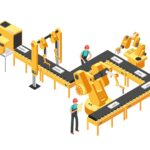
I firmly believe the future of software engineering is a “lights out” setup: we describe what we want through specs, and agents write, test and ship the code. Tools like this are what that looks like in practice. Not one magic agent that does everything, but a small factory line of specialised ones, with deterministic checks in between them and humans at the gates that matter.
I use coding agents hands-on pretty much every day, and the thing I’ve learnt the hard way is that the agent is rarely the weak spot. The weak spot is the instructions you gave it and the checks you didn’t run. A setup where an independent reviewer and a test script stand in between the agent and your main branch fixes more problems than any model upgrade.
So Where Do the Humans Go?
Up the line, mostly. If the factory runs itself, the valuable work moves to the two ends: writing a spec good enough that the agents build the right thing, and deciding at the human gates whether what came out is actually what the business needed. That’s a different skill from writing code, and I’d argue it’s closer to what good tech leads already do. As a CTO, I’d start thinking now about who on my team is good at those two jobs, because they’re about to become the most important people in the building.
A Word of Caution
Don’t get me wrong, I wouldn’t roll this out on Monday across the company. LoopForge’s own docs warn that Docker socket access gives control of the host’s Docker daemon, so it’s meant for trusted teams, not untrusted multi-tenant setups. In plain English: whoever controls the factory controls the building, so run it on infrastructure you’d be happy to lose. And bear in mind that a workflow engine makes a bad process run faster too. If your current delivery process is a mess, encoding it won’t make it less of a mess, just a quicker one.
Bottom line: the companies that win with AI won’t be the ones with the best agent, but the ones with the best-written process for their agents. Which means the dusty SOP folder on your wiki might just be your most valuable asset. Who’d have thought? 🙂